
"large coffee bean"
30000 article(s) found

Kenyan Coffee Origin Esopia Coffee production area introduces boutique coffee
Kenya is bordered to the north by Ethiopia, the origin of Arabica coffee trees, but it was not until the beginning of the 20th century that coffee cultivation began. In the 19th century, missionaries introduced Arabica trees from the leaves, but did not plant them in large quantities. It was not until 1893 that coffee was cultivated on a large scale because of the introduction of Brazil's ancient bourbon seeds. That is to say, Kenyan coffee is of Brazilian origin, because of water.

Introduction to the flavor of Kenyan coffee
Kenya is bordered to the north by Ethiopia, the origin of Arabica coffee trees, but it was not until the beginning of the 20th century that coffee cultivation began. In the 19th century, missionaries introduced Arabica trees from the leaves, but did not plant them in large quantities. It was not until 1893 that coffee was cultivated on a large scale because of the introduction of Brazil's ancient bourbon seeds. That is to say, Kenyan coffee is of Brazilian origin, because of water.

What kind of coffee are there in Kenya coffee fruit producing areas? Kenya
Kenya Coffee is the origin of Arabica coffee trees in Kenya, but it was not until the beginning of the 20th century that it began to cultivate coffee. In the 19th century, missionaries introduced Arabica trees from leaves, but did not plant them in large quantities. It was not until 1893 that coffee was cultivated on a large scale after the introduction of Brazil's ancient bourbon seeds, that is, Kenyan coffee.

The large granule shape of San Juan Xido boutique coffee beans in Honduras: history, development, history and culture
For coffee production, the geographical conditions of Honduras are no less than those of its neighboring coffee-producing countries such as Guatemala and Nicaragua. There are 280000 hectares of coffee plantations in Honduras, mainly small coffee plantations, most of which are less than 3.5ha. These coffee plantations account for 60% of the total coffee production in Honduras. In the coffee garden, because the planting land belongs to
A family of coffee beans
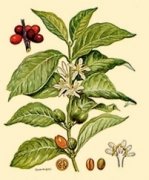
There are about 60 species of coffee in the world, of which only 25 species are cultivated to make coffee, of which only 4 species are used as commercial coffee: large fruit coffee (Coffea liberica), medium fruit coffee (Coffea canephora), small fruit coffee (Coffea arabica) and high yield coffee (Coffea dewevrei). These are botanical names. Coffee in the world at present
A family of coffee beans
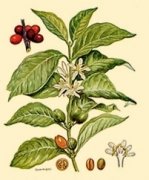
There are about 60 species of coffee in the world, of which only 25 species are cultivated to make coffee, of which only 4 species are used as commercial coffee: large fruit coffee (Coffea liberica), medium fruit coffee (Coffea canephora), small fruit coffee (Coffea arabica) and high yield coffee (Coffea dewevrei). These are botanical names. Coffee in the world at present

Introduction of Mexican coffee beans with large particles and strong sweet taste
Mexicans are optimistic and enthusiastic, and it can also be seen from their coffee that the mellow Mexican coffee is not only loved by the native people, but also praised by many coffee connoisseurs. There are many ways to taste Mexican coffee, mainly divided into alcoholic and non-alcoholic practices. Non-alcoholic Mexican coffee often goes with milk. Put a cup

Flavor and taste of Kenyan Coffee Manor introduce the characteristics of Kenyan coffee beans in Berman Manor
Kenyan coffee can not underestimate Kenyan small farmers, they are no less ant soldiers, the overall production capacity is higher than large farms, about 6: 4, which is quite rare in bean-producing countries. Kenyan coffee is widely appreciated by connoisseurs, thanks in large part to small farmers guarding the foothills and producing high-quality coffee. In addition, Kenya beans must have a strict grading system, according to the size of the coffee beans taken out by the washing plant.
A brief introduction to the origin, development, history and culture of glossy Kenyan boutique coffee beans
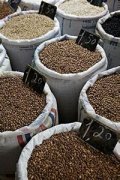
Kenya coffee harvest season there are two harvest seasons in Kenya, the main harvest season is from October to December and the secondary harvest season is from May to July. Large coffee processing farms in Kenya usually have independent processing facilities. A large number of small farmers usually pick ripe coffee fruits by hand. Coffee picking is a labor-intensive job, which requires the whole family to go out or even return during the harvest season.

Which coffee varieties with large sales have coffee water distribution network cleaning?
Santos Coffee is mainly produced in Sao Paulo, Brazil. This kind of coffee acid, sweet and bitter is neutral, moderate concentration, with moderate sour taste, elegant and special taste, is the best preparation beans. Known as the backbone of coffee, a single drink also has a good flavor. Mocha coffee is produced in Ethiopia. Beans are small and fragrant, with strong sour and mellow taste, moderate sweet taste and special flavor. After washing treatment

The history of coffee roaster basic knowledge of coffee
As early as the 13th century, the Arabs invented to put coffee beans in a pot, stir-fry them with fire, grind them into powder, and then brew coffee. The early Arabs liked to bake the beans shallowly and boil them with spices such as cardamom. Later, this coffee stir-frying method spread to Syria, Turkey and Egypt, where it was used to stir-fry the coffee black, then grind it into powder and add it.

Introduction of Cuban crystal coffee with bright green color and large particles
Crystal Mountain Coffee is very precious. This is mainly for two reasons. The first reason is the economic sanctions imposed by the United States against Cuba and the non-opening up of Cuban imports. The second reason is that at present, Cuban coffee beans are mostly acquired by the French and Japanese markets, especially Japan, so it is difficult to buy coffee beans directly from Cuba. Nevertheless, Cuban coffee is among coffee lovers around the world.

Boutique Coffee Analysis of Coffee beans
There are about 60 species of coffee in the world, of which only 25 species are cultivated to make coffee, of which only 4 species are used as commercial coffee: large fruit coffee (Coffea liberica), medium fruit coffee (Coffea canephora), small fruit coffee (Coffea arabica) and high yield coffee (Coffea dewevrei). These are botanical names. Coffee in the world at present

What are the main types of coffee trees?
The main species of coffee trees: Liberian species, namely large-grained species, native to Liberia in Africa, as well as Malaysia and other few countries. Its cultivation history is slightly shorter than the other two coffee trees. Liberian coffee trees are suitable for growing in lowlands. Its trunk is high and strong, it is 18 meters high, its leaves are large and tough, and its fruits and coffee beans are also very large. Its seed coat is close to the kernel.
How to choose coffee beans by hand
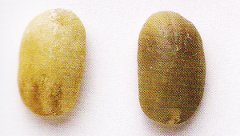
Apples don't taste different because of size, which I agree with, but in the roasting of coffee beans, it doesn't matter if they're heated anyway. Coffee beans harvested from the same tree, regardless of size

Introduction to the method of flavor description and taste treatment of coffee bean grinding characteristics in Kenya
Kenyan coffee bean grinding characteristic variety manor flavor description taste treatment method the Kenyan coffee variety was first brought to Kenya to be planted in Bourbon bourbon. In the 1950s, the then agricultural research institution, Scott Laboratory, made unremitting efforts to select two excellent hybrids, SL-28 and SL-34, which subverted people for a long time.

The Asian coffee bean producing country Yunnan mainly produces coffee beans. Where there is tea, there is coffee.
Professional coffee knowledge exchange more coffee bean information please follow the coffee workshop (Wechat official account cafe_style) Qianjie-Yunnan coffee production area introduction after 1930, the famous overseas Chinese leader Mr. Liang Jinshan brought coffee to Pudong and Luoming to plant coffee until after the founding of the people's Republic of China. After 1952, under the guidance of experts from Baoshan Rejing, Lujiang and other places began to grow a large number of coffee.

Costa small cup is the number of large cup, netizens measured COSTA coffee, rising cup is actually shrinking
Liter cup, how much? Is it water that lifts the cup? Would you like a raise? Are you familiar with this sentence? So how much is this one? Do you know how much coffee is actually in the large, medium and small cups every time you buy it? This is not clear at all. Measured Costa American coffee, large cup 30 yuan, medium cup 27 yuan, small cup 24 yuan, the difference between 3 yuan. Then I'll raise the cup, how much?

What are the main types of coffee trees and where do most coffee trees grow?
The main species of coffee tree: Liberian species Liberian species or large seed species, native to Liberia in Africa, and Malaysia and a few other countries. It has a slightly shorter history than the other two coffee trees. The Liberian coffee tree is suitable for lowland cultivation. It has a tall and strong trunk, which is 18 meters high, large and tough leaves, and large fruits and coffee beans. Its seed coat clings to the kernel,

Introduction to the flavor description method of Brazilian Bourbon Rivida coffee beans
Brazilian Coffee Bean Camo Manor is located in the southern state of Minas Gerais. Here are manors large and small, mainly producing Arabica coffee. Coffee production began at the beginning of the 20th century, which is a relatively new manor. The highest part of the planting area, which is 1300 meters above sea level, belongs to the highland topography in the producing area of Brazil, with large fluctuations as a whole. The refining method only uses natural drying, but near